Taking care of your teeth is crucial for good dental health. It helps prevent issues like tooth decay, gingivitis, and gum disease.
Daily habits, like using fluoride toothpaste and brushing properly, can greatly improve your oral hygiene.
This article explores daily practices that strengthen your smile and improve your overall well-being.
Importance of Daily Oral Hygiene Habits
Brushing with fluoride toothpaste and flossing daily can lower the risk of gum disease, periodontitis, and cavities by up to 50%.
Adding simple habits can boost these benefits even more.
For instance, brushing twice a day with fluoride toothpaste strengthens enamel and reduces plaque buildup.
Rinsing with an antimicrobial mouthwash kills bacteria that cause gum disease, cutting plaque formation by up to 20%.
Following these practices regularly leads to better oral health and greatly lowers the chances of dental issues.
Effective Brushing Techniques
Using proper brushing techniques is key to removing plaque, preventing cavities, and keeping tooth enamel healthy.
Studies show that electric toothbrush users can reduce plaque levels by 21% compared to manual brush users.
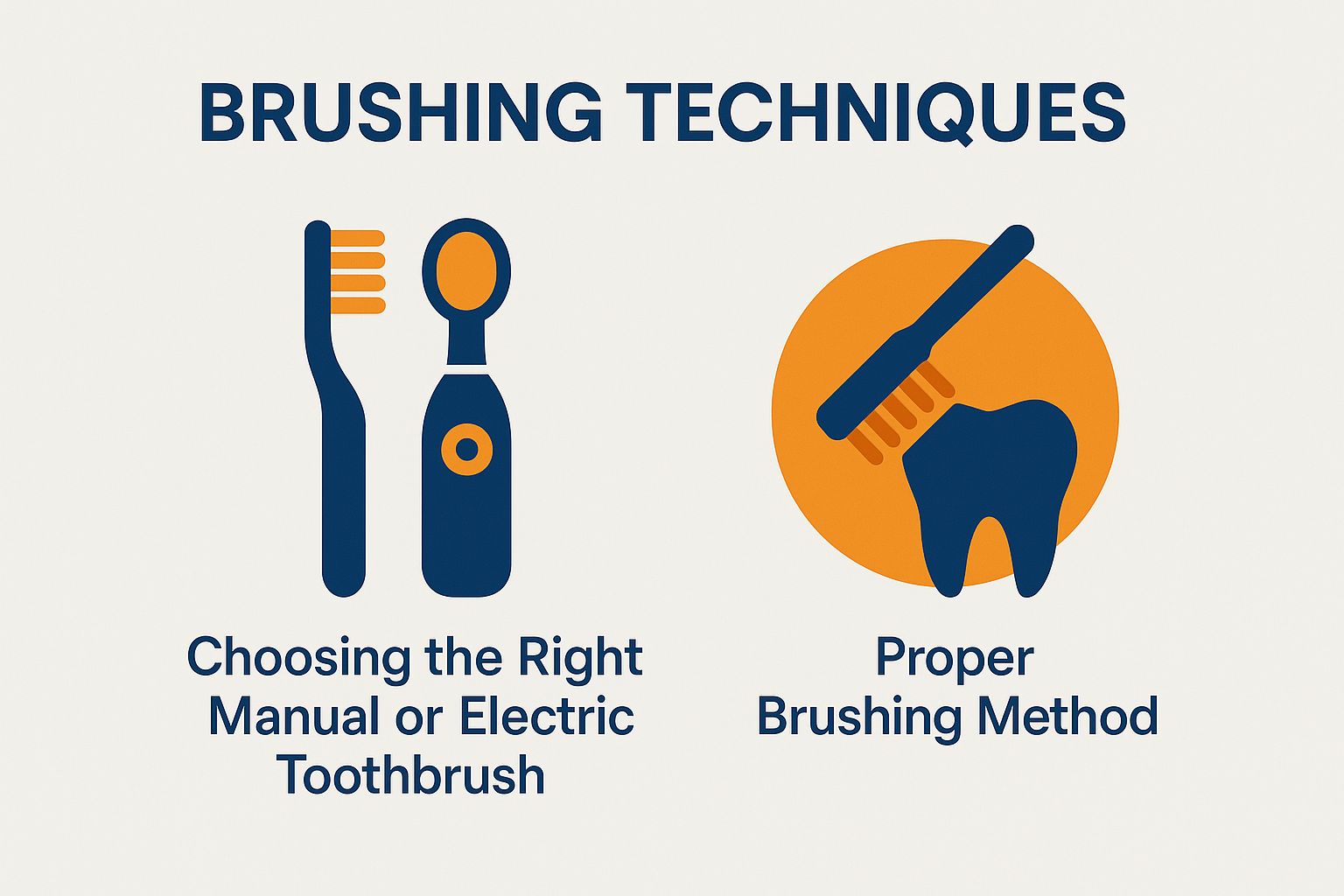
Choosing Your Toothbrush: Manual vs. Electric
Choosing the right toothbrush can greatly improve your oral hygiene routine. Electric toothbrushes typically range in price from $30 to $300 and offer various features, including timers and pressure sensors.
On the other hand, manual toothbrushes are generally more affordable and provide users with precise control over pressure and technique, making them suitable for individuals who prefer a hands-on approach.
Consider your specific oral health needs when choosing between these options. For instance, individuals with gum sensitivity may benefit more from toothbrushes with softer bristle heads. Conversely, electric toothbrushes often include settings designed for sensitive teeth, which can aid in maintaining comfort during brushing.
Ultimately, testing a few different options may be the most effective way to ascertain personal preferences and determine the best fit for one’s oral care routine.
How to Brush Properly
Hold your toothbrush at a 45-degree angle to clean your teeth effectively.
Brush for at least two minutes, twice a day.
Common mistakes are brushing too fast and ignoring the gum line.
Additionally, it is important to replace your toothbrush every three to four months to maintain optimal cleaning efficiency. Brushing your tongue is essential for removing bacteria and promoting fresh breath.
Flossing: A Key to Oral Health
Flossing is vital for oral hygiene. Research shows that consistent flossing can lower the risk of gum disease by 40%.
How and When to Floss
Floss at least once a day, preferably before brushing, to effectively remove plaque between your teeth.
Use about 18 inches of floss to floss correctly.
Gently guide the floss between your teeth. Curve it around the base of each tooth and slide it beneath the gumline. For wider gaps, use interdental brushes. They clean areas where floss is less effective.
Avoid common errors like using excessive force, which can harm your gums. Don’t neglect to floss your back teeth. Maintain a gentle and consistent motion. This prevents irritation and ensures thorough cleaning.
Diet and Its Impact on Teeth
Your diet affects dental health. Certain foods can cause or prevent tooth decay and gum disease.

Foods to Embrace
Eat foods rich in calcium, phosphorus, and vitamin D. Dairy products and leafy greens strengthen tooth enamel and support dental health.
Along with dairy and leafy greens, it is advisable to include almonds in the diet, as they are high in calcium and promote saliva production, which is crucial for neutralizing acids that can harm teeth. Fatty fish, such as salmon, provide vitamin D, which enhances calcium absorption, thereby contributing to stronger teeth. To maximize these benefits, it is recommended to aim for daily servings: one cup of yogurt, a handful of almonds, or a serving of fatty fish.
Furthermore, crunchy fruits and vegetables, such as carrots and apples, can assist in naturally cleaning teeth and stimulating the gums, ultimately contributing to improved oral health.
Foods to Avoid
Cut back on sugary foods and acidic drinks. This reduces the risk of cavities and promotes healthier teeth.
Common offenders include sodas, candies, and citrus juices. Sodas are particularly detrimental, as they not only contain high levels of sugar but also introduce acidity that can erode tooth enamel.
As an alternative, individuals may consider flavored sparkling water or herbal teas, which provide flavor without the added sugar. When cravings for candy arise, dark chocolate or fruits such as apples can serve as satisfying substitutes, offering sweetness along with fiber and essential vitamins.
By making informed dietary choices, individuals can enjoy flavorful options while safeguarding their dental health.
Importance of Regular Dental Check-ups
Regular dental check-ups are essential for the prevention of oral health issues.
The American Dental Association recommends visiting the dentist every six months.
Frequency of Visits
Most people should visit the dentist twice a year. Those with gum disease may need more frequent visits. For optimal dental health, individuals with a history of cavities or other dental issues should consider increasing their visits to three to four times annually.
Research indicates that regular check-ups can reduce the risk of severe dental problems by up to 40%.
During appointments, the dentist will clean your teeth and check for early signs of decay. They will also offer oral hygiene advice. Communicate any dental concerns, like sensitivity or pain, to help the dentist tailor their approach. To maintain consistency and ensure that appointments are not missed, it is beneficial to utilize reminders and scheduling tools, such as dental applications or calendar alerts.
What to Expect During a Check-up
During a dental check-up, one can expect a comprehensive examination of the teeth and gums, accompanied by a professional cleaning designed to eliminate plaque and tartar accumulation.
The dentist will begin by inspecting the oral cavity for signs of cavities, gum disease, and other potential issues like bruxism, utilizing instruments such as a mirror and probe for a detailed assessment.
Following this examination, a dental hygienist will conduct a cleaning, employing specialized tools to effectively remove plaque and tartar buildup, and subsequently polish the teeth.
It is crucial to communicate any dental concerns, including sensitivity or pain. This helps the dentist tailor their approach. Regular dental check-ups are essential not only for maintaining oral health but also for preventing more serious conditions in the future.
Additional Oral Care Practices
Adding mouthwash and chewing gum can enhance your dental hygiene routine.

Using Mouthwash
Using mouthwash with fluoride protects against tooth decay. It also reduces plaque and tartar buildup when used daily. Adding mouthwash to your oral hygiene routine is easy.
You can choose a fluoride mouthwash to strengthen enamel or an antiseptic one, like chlorhexidine, for serious gum issues.
Use mouthwash after brushing and flossing. Swish it in your mouth for 30 seconds to one minute.
Be cautious with antiseptic mouthwash. Prolonged use can disrupt the oral microbiome.
Keep mouthwash accessible in the bathroom to remind you to use it regularly. This helps you enjoy its protective benefits.
Benefits of Chewing Gum
Chewing sugar-free gum after meals can enhance saliva production by up to 10%, which aids in neutralizing acids and mitigating bad breath. For optimal results, it is advisable to chew gum for about 20 minutes after meals, as recommended by the Cleveland Clinic.
Choose products with the ADA Seal of Acceptance. This means they meet safety and effectiveness standards set by the American Dental Association.
Some reputable brands include:
- Orbit
- Trident
- 5 Gum
Regularly chewing gum helps strengthen tooth enamel and lowers the risk of cavities. Chewing gum regularly strengthens tooth enamel and lowers the risk of cavities. It’s a great addition to your routine, but avoid excessive consumption to prevent jaw discomfort. However, it is important to avoid excessive consumption, as overindulgence may lead to jaw discomfort and should be part of a healthy diet.
Recap of Daily Habits
Incorporating essential daily habits such as proper brushing, flossing, and regular dental check-ups can significantly enhance oral hygiene, gingivitis prevention, and overall health. Incorporate essential daily habits like proper brushing, flossing, and regular dental check-ups to enhance your oral hygiene and overall health.
To optimize your dental care routine, it is advisable to:
- Brush twice a day for at least two minutes using fluoride toothpaste suitable for your age.
- Complement this practice with daily flossing to remove plaque between teeth, thereby preventing cavities and gum disease.
Scheduling dental check-ups every six months is critical, as these visits allow your dentist to identify potential issues early and perform professional cleanings, which are important for managing diabetes and heart disease. Schedule dental check-ups every six months. These visits help your dentist identify potential issues early and perform professional cleanings, important for managing diabetes and heart disease.
Additionally, using mouthwash with antibacterial and fluoride properties can greatly improve your oral health. By adopting these practices, individuals can contribute significantly to achieving a brighter and healthier smile.