

Maintaining a healthy lifestyle is crucial for seniors. Dental care and oral hygiene play a significant role in overall wellness. With the rising costs of treatments and the risk of oral cancer, dental insurance is essential. It can enhance your quality of life and tackle common oral health issues. In this article, we’ll explore the best dental plans for seniors, highlighting options that not only save on dental costs but also ensure access to essential services from trusted dentists and improve overall wellness.
Importance of Dental Insurance for Seniors
Regular medications and preventive care are essential for maintaining oral health and managing special dental challenges. Dental insurance is vital for seniors. It offers financial protection and access to necessary services that maintain good oral hygiene.
Financial Benefits
On average, seniors can achieve savings of up to 60% on dental expenses through comprehensive insurance coverage. This makes preventive care more accessible and addresses oral health concerns.
For example, Delta Dental offers plans starting at $30 per month. These plans cover routine exams and cleanings, saving members over $200 annually.
In comparison, Anthem’s plans, with an average monthly premium of $40, can lead to significant savings on procedures such as root canals, which may exceed $1,000 out-of-pocket. With insurance, the costs of these procedures may incur copayments as low as $200.
Statistics indicate that seniors with insurance are 50% more likely to visit the dentist regularly. This contributes to the prevention of costly emergency care and oral health issues.
Access to Quality Care
Reliable dental insurance lets seniors access quality care. This is crucial for preventing risks like oral cancer. Having reliable dental insurance enables seniors to access quality dental care, which is essential for preventing oral health risks such as oral cancer and managing health challenges.
Insurance providers such as Cigna and Guardian offer extensive networks that facilitate the process of locating local dentists. For example, Cigna maintains a network that includes thousands of providers nationwide, ensuring accessibility for seniors in both urban and rural areas.
Typically, these plans cover preventive services, including cleanings and X-rays, at little to no cost. In contrast, Guardian highlights its high patient satisfaction ratings, particularly concerning restorative services.
Seniors should evaluate options based on local provider availability and their individual care needs. This helps identify the best plan.
Types of Dental Plans Available
Medicare Advantage and Medigap are also considerable options for seniors. Seniors must navigate the dental plan landscape carefully. Understanding available options helps them choose tailored coverage.
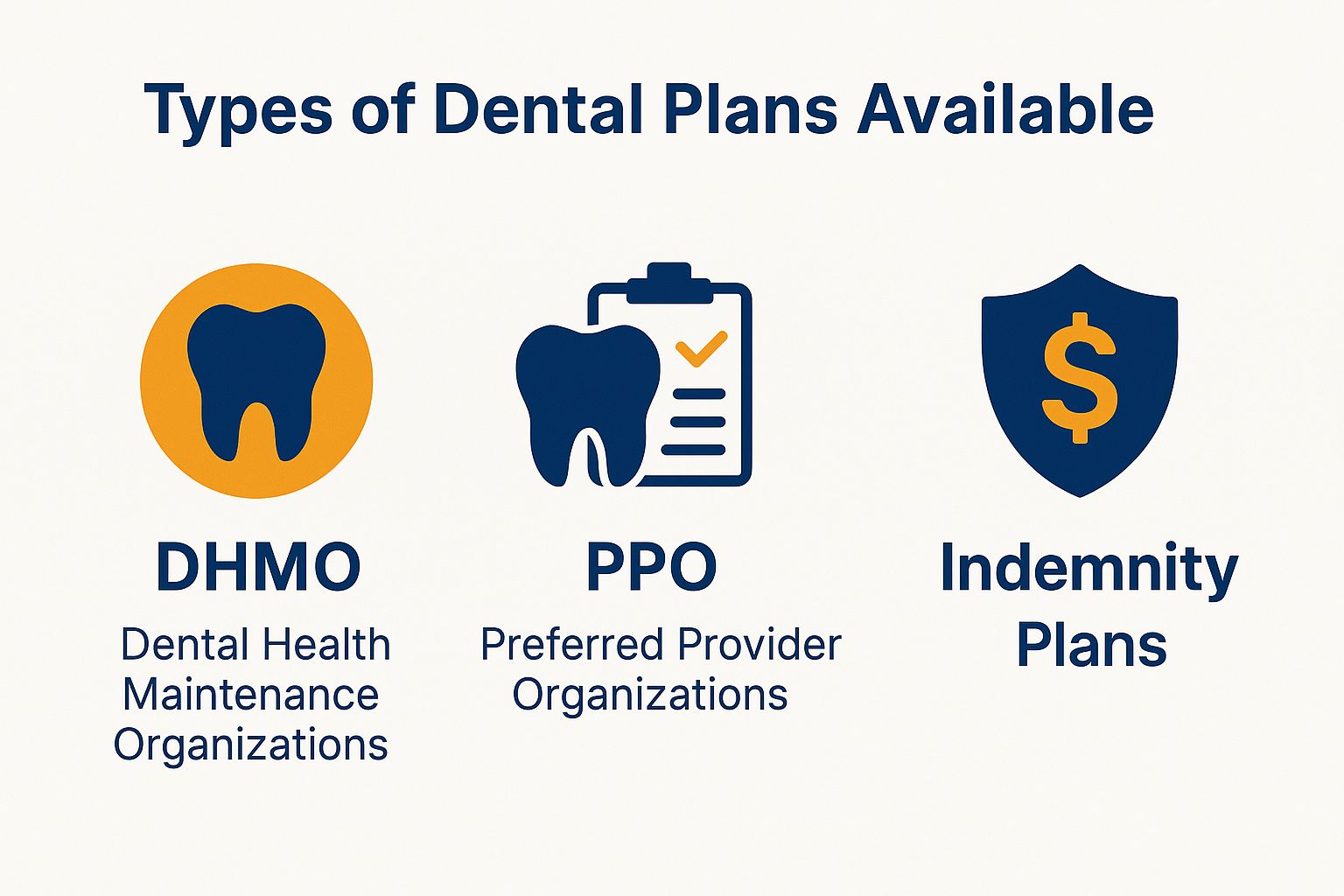
Dental Health Maintenance Organizations (DHMOs)
DHMOs offer cost-effective solutions for seniors. They provide comprehensive preventive care through a network of dentists. This structure is particularly beneficial, as members generally pay a fixed monthly premium, typically ranging from $20 to $40.
Services commonly covered include routine cleanings, X-rays, and wellness checkups, all of which facilitate the early detection of dental issues. Members are required to select a primary dentist within the network, thereby ensuring continuity of care.
For instance, having a familiar dentist can lead to personalized treatment plans and foster enhanced trust. This can significantly assist seniors in managing their oral health as they age.
Preferred Provider Organizations (PPOs)
PPOs offer flexibility in choosing dentists and specialists, often at a higher cost. Preferred Provider Organizations (PPOs) give seniors the freedom to choose their dental providers. This improves access to specialists and a wider range of services, including major restorative procedures.
For example, under a PPO plan, seniors can select an in-network dentist for routine check-ups. They can also visit an out-of-network oral surgeon for implants without facing high out-of-pocket costs.
PPOs generally provide lower co-pays and a percentage of coverage for out-of-network services, which incentivizes seniors to pursue necessary treatments. Leveraging this flexibility can significantly enhance a senior’s management of dental health.
Understanding Indemnity Plans
Seniors should thoroughly review the reimbursement rates. Indemnity plans offer extensive dental insurance coverage for seniors. Indemnity plans represent a conventional approach to dental insurance, granting seniors the liberty to select any dentist without limitations related to provider networks, offering individual dental benefits.
These plans typically feature a straightforward benefit structure, often covering approximately 50-100% of dental services, contingent upon the specific procedure.
Coverage limits are capped at $1,500 annually, offering a safety net for extensive dental treatments. For instance, preventive services such as cleanings may be fully covered. Whereas more complex treatments, including crowns or bridges, might yield a reimbursement rate of 50%. It is essential for seniors to thoroughly review the reimbursement rates, as these factors can significantly influence their out-of-pocket expenses.
Although indemnity plans may initially entail higher premiums, they offer flexibility and can ultimately result in cost savings for seniors requiring specialized care.
Choosing the Right Dental Plan: Key Factors
Various dental coverage options are available for seniors. Choosing the appropriate dental insurance plan necessitates a thorough evaluation of several critical factors that directly influence coverage and out-of-pocket expenses.

Coverage and Benefits
Preventive dental care services are vital for oral health and should be adequately covered. Evaluating coverage and benefits is crucial. This determines the types of dental services and preventive treatments available to seniors.
It is crucial to conduct a thorough review of dental insurance plans to identify specific coverage types. One should seek preventive care options, such as dental exams and cleanings, which are typically covered at 100%. These preventive treatments are crucial for oral health management.
Basic procedures like fillings and extractions usually have partial coverage, typically around 80%. Major restorative services, such as crowns and dentures, may be covered at a lower percentage, commonly around 50%.
It is also important to consider any waiting periods for major services and annual maximum limits that may impact treatment options. Resources such as Medicare.gov or the insurance provider’s website can provide clarity on these details.
Understanding Premiums and Deductibles
It’s important for seniors to understand the costs of premiums and deductibles. This helps them budget for their dental care effectively.
For instance, a typical premium for a senior dental plan can range from $30 to $75 per month. Ameritas offers a plan with a $50 annual deductible, which covers major services after a waiting period of 12 months.
In contrast, Aflac’s plan features a higher starting premium of approximately $55 per month; however, it provides lower out-of-pocket costs with a $100 deductible for comprehensive coverage.
Seniors should conduct a thorough comparison of these options, not only considering the price but also evaluating coverage limits, waiting periods, and overall benefits to identify the most suitable plan for their needs.
Importance of Provider Networks
The provider network of a dental insurance plan affects the quality and accessibility of care. It’s important for seniors to ensure they can access routine services.
The network of providers associated with a dental insurance plan plays a crucial role in determining the quality and accessibility of care available to seniors, ensuring accessibility routine.
Ahead of selecting a plan, seniors should carefully evaluate the provider networks offered by various insurance companies. Cigna has a large network of dental care professionals, making it easy to find a provider nearby.
Delta Dental is also a good option, but its provider network may be smaller in some areas, limiting choices. Seniors should check the availability of local dentists and specialists. They also need to understand the services covered by each plan.
Top Dental Plans for Seniors
Top dental plans for seniors include Delta Dental, Cigna Healthcare, and Guardian. Choosing the right dental plan is crucial. It can greatly enhance seniors’ oral health and financial security.
Plan A: Overview and Benefits
Delta Dental’s Plan A offers comprehensive dental insurance coverage for seniors. Plan A, offered by Delta Dental, is designed to provide comprehensive preventive care while delivering substantial savings on major dental procedures.
Under Plan A, individuals receive 100% coverage for preventive services, such as cleanings and examinations. This ensures that dental health can be prioritized without financial concern, addressing oral health issues effectively.
Major procedures like root canals and crowns are covered up to 60%. This greatly lowers out-of-pocket costs. The annual premium is approximately $35 per month, rendering it an accessible option for families.
Customer satisfaction rates are reported to be around 90%, indicating a high level of trust in the services provided.
Additionally, coverage limits are capped at $1,500 annually, offering a considerable safety net for extensive dental treatments.
Plan B: Overview and Benefits
Cigna Healthcare offers Plan B, which provides comprehensive dental coverage tailored to seniors’ needs. Plan B from Cigna Healthcare prioritizes affordability while ensuring that a comprehensive range of dental services is accessible to seniors, including major restorative procedures.
A distinctive feature of Plan B is its lower premiums in comparison to traditional plans. This positions it as a budget-friendly alternative for this demographic.
Enrollees value the extensive coverage offered, which includes preventive care such as routine cleanings and examinations, as well as major services like crowns and dentures.
Cigna’s wide network of providers affords individuals the flexibility to select qualified dentists. This contributes to a sense of security among many seniors. This reassurance stems from the knowledge that they can access quality care without incurring significant out-of-pocket expenses, thereby underscoring the plan’s effectiveness in meeting their dental needs.
Tips for Maximizing Dental Benefits
Seniors can maximize their dental insurance benefits with specific strategies. This includes consulting local dentists and considering their health lifestyle.
Seniors should prioritize preventive care to make the most of their dental insurance. Biannual check-ups and cleanings are often fully covered.
Understanding insurance details and coverage limits is crucial. For example, if a plan covers up to $1,500 annually, planning treatments wisely can reduce unexpected costs.
Using insurance for early interventions, like fillings, can save money later. Addressing issues before they require complex procedures is key.
Using a personal calendar can help track regular and urgent dental care appointments. This serves as a reminder of benefits each year.
Frequently Asked Questions
How can seniors save on dental care costs?
Seniors can save on dental care costs by choosing a dental plan with comprehensive coverage at an affordable price. Some popular options include AARP Dental Insurance, Delta Dental Senior Smiles, Guardian, and Humana Dental Insurance.
How can seniors save money on dental care?
Seniors can save money on dental care by shopping around for the best rates and taking advantage of discounts offered by dental insurance providers. They should also consider a dental plan that meets their needs.
What types of coverage should seniors look for in a dental plan?
Seniors should look for dental plans that cover routine preventive care and major procedures like crowns and dentures. They should also consider plans that offer coverage for pre-existing conditions and have a wide network of dental providers.
Dental Plans Designed for Seniors
Yes, many dental plans cater specifically to seniors. These plans often have lower premiums and better coverage for common dental issues like gum disease and tooth loss.
Can seniors still get dental coverage if they have pre-existing conditions?
Yes, many dental plans for seniors offer coverage for pre-existing conditions, including those related to health conditions such as heart disease and diabetes. However, it is important to carefully review the plan’s terms to confirm coverage for pre-existing conditions and to what extent.
How can seniors choose the best dental plan for their needs?
Seniors should consider their dental needs and budget when choosing a plan. It is also important to look at the plan’s coverage and provider network to ensure it meets their needs. A trusted dental insurance agent can help make an informed decision.


