Dental trauma can occur suddenly. Knowing how to respond is crucial. Whether it’s a knocked-out tooth or other dental injuries, according to the Cleveland Clinic, prompt dental treatment can greatly improve outcomes after an accident. This article offers essential first aid tips and guidance on when to visit the dentist for dental emergencies, ensuring you’re well-prepared to handle dental emergencies effectively.
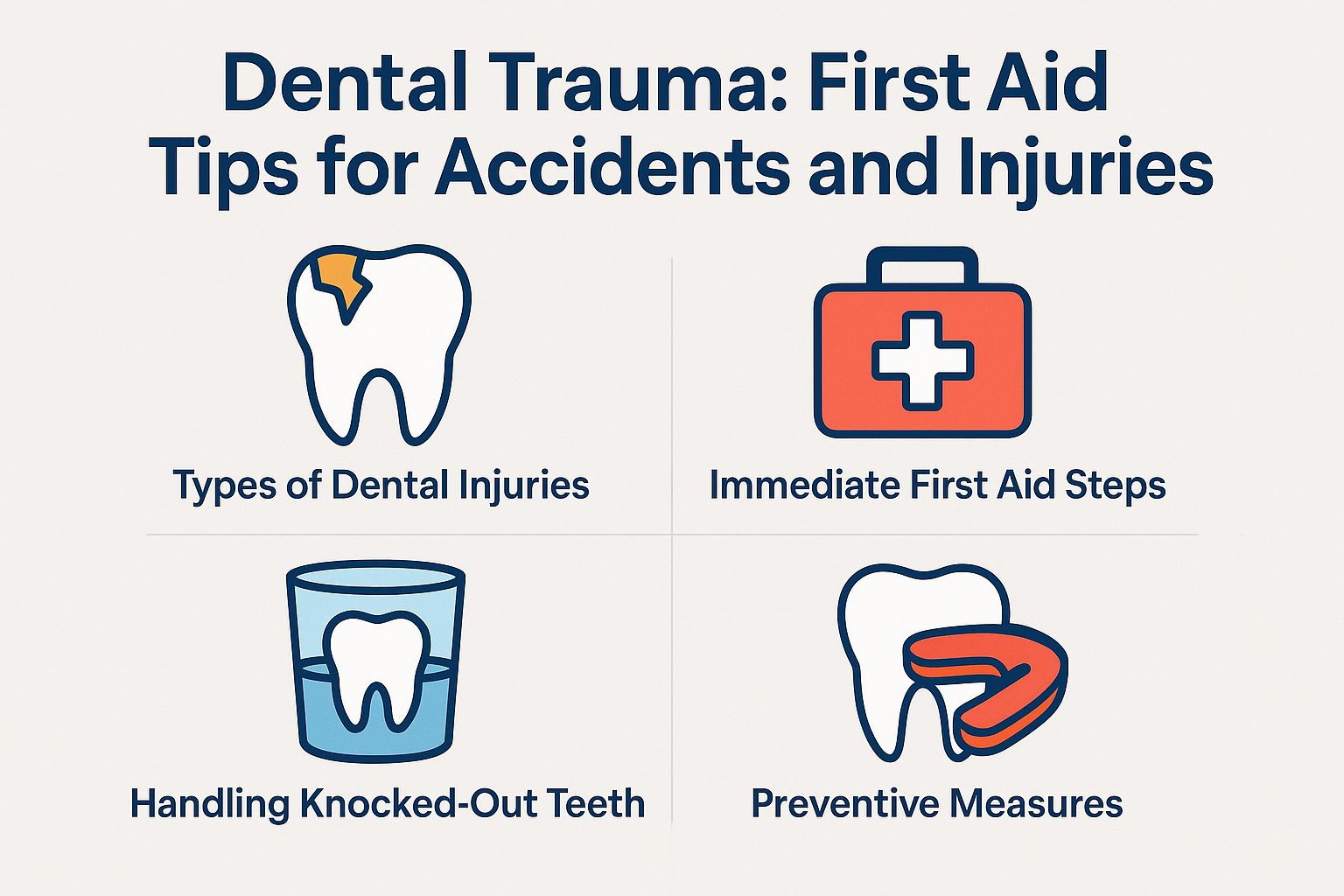
Types of Dental Injuries
Understanding dental injuries is vital for timely treatment. A comprehensive understanding of the various types is essential for facilitating timely intervention and ensuring effective treatment in instances of dental trauma.
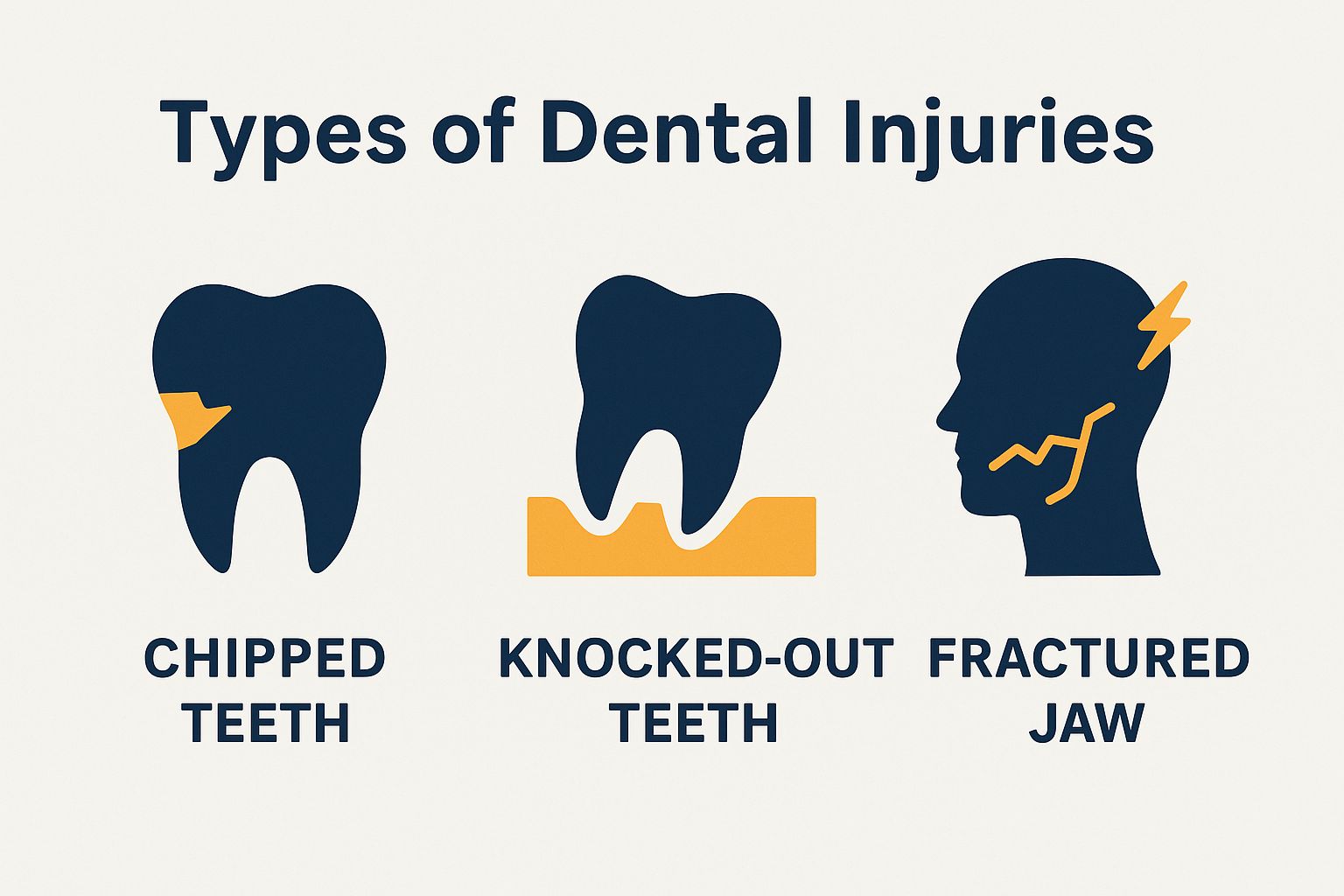
Chipped Teeth
Chipped teeth can occur due to trauma or decay. They can often be restored with bonding, fillings, or crowns.
A dental assessment is necessary for a chipped tooth. A dentist will evaluate the extent of the damage to determine the most appropriate treatment.
For minor chips, dental bonding is a viable option, typically costing between $300 and $600. This procedure effectively smooths the tooth’s surface and restores its appearance.
More significant damage may necessitate the placement of a crown, which generally ranges from $1,000 to $3,500, to provide the requisite strength and support. In certain instances, veneers may also be considered, particularly for front teeth, with costs ranging from $800 to $2,500.
Timely treatment improves appearance and prevents complications like sensitivity and pulp exposure.
Knocked-Out Teeth
A knocked-out tooth is an emergency that needs quick action for successful replantation. Quick action is needed for successful replantation.
Acting quickly increases the chances of successful replantation. Gently rinse the tooth with saline or clean water. Do not scrub or remove any tissue fragments.
If feasible, place the tooth back into its original socket. If this is not possible, it is advisable to store the tooth in milk or a saline solution while seeking immediate dental care.
Research indicates that teeth replanted within one hour exhibit a success rate of approximately 90%, which declines to around 50% if replantation occurs after two hours. Therefore, timely treatment is essential; visiting a dentist within 30 minutes is strongly recommended.
Fractured Jaw
Fractured jaws represent serious injuries that can result in significant complications if not addressed promptly and effectively by a qualified dental professional. Look for severe pain, swelling, and difficulty opening the mouth.
Diagnostic assessments typically involve dental radiographs to ascertain the type and location of the fracture, as well as CT scans for more complex cases.
Treatment options may vary from conservative methods, such as the use of a splint or soft diet, to surgical interventions, including wiring the jaw shut or performing reconstructive surgery in severe instances. A comprehensive dental evaluation is essential to determine the most appropriate treatment plan.
Immediate First Aid Steps
First aid significantly affects the outcome of dental injuries. Immediate first aid can greatly impact the prognosis of dental injuries, making it crucial to understand the appropriate steps to take in an emergency situation.
Assessing the Injury
Assessing the injury is the first step in effective first aid for dental trauma. A thorough dental assessment of the injury is the initial step in providing effective first aid for dental trauma, ensuring that the dental care team is equipped with comprehensive information.
Start with a visual inspection of the mouth for obvious injuries like fractured teeth or bleeding. It is essential to note any displaced teeth and evaluate for loose or missing ones.
Subsequently, apply gentle pressure around the affected area to ascertain any pain or sensitivity. Document the patient’s level of discomfort and any swelling present.
Share key details with the dentist, like how the injury happened, when it occurred, and any first aid steps taken. This info is vital for diagnosis and treatment.
Controlling Bleeding
It’s crucial to control bleeding during dental emergencies. This helps stabilize the patient until professional help arrives.
First, apply clean gauze directly to the wound. Maintain firm pressure for at least 10 minutes without checking the bleeding.
If bleeding continues, elevate the head. Avoid lying flat to reduce blood flow to the area.
If bleeding lasts more than 30 minutes, seek urgent care. This may indicate a serious injury.
Do not rinse or touch the area. This helps prevent further bleeding.
Handling Knocked-Out Teeth
Acting quickly with a knocked-out tooth improves the chances of reattachment. Follow these steps to preserve the tooth for replantation.
Preserving the Tooth
Follow these steps to preserve the tooth for replantation:
- First, rinse the tooth gently with water to remove any dirt, taking care to avoid scrubbing or using soap.
- Next, if feasible, place the tooth back into its socket without touching the root.
- If this is not possible, store the tooth in a container filled with saline solution or milk, both of which help maintain moisture.
Teeth stored in milk have a 60% success rate for replantation, compared to just 12% in dry conditions. Seek dental care within 30 minutes for the best chance of success.
When to See a Dentist
Know when to see a dentist to improve recovery chances.
If a tooth is knocked out, see a dentist within 30 minutes. Rinse the tooth gently and place it in milk or saline to keep it moist.
For fractures with pain or swelling, schedule a dental visit within a few days. Seek immediate care for severe pain, ongoing bleeding, or a loose tooth.
Keep a first-aid kit with dental wax and saline handy for minor injuries until professional help is available.
Preventive Measures
Taking preventive measures is key to reducing dental injuries, especially for high-risk groups like athletes.
Mouthguards for Sports
Mouthguards are essential in sports to significantly lower the risk of dental injuries.
You can choose from two types of mouthguards: custom-made or over-the-counter.
Popular brands include Shock Doctor and Boil and Bite for over-the-counter options.
The American Dental Association reports nearly 200,000 sports-related dental injuries each year in the U.S., highlighting the need for mouthguards.
Make sure the mouthguard meets sports safety standards for the best protection.
Education on Dental Safety
Teaching children and athletes about dental safety and hygiene is vital. This helps reduce dental injuries and boosts oral health.
Schools and sports organizations should implement dental safety programs to enhance awareness. These programs should include interactive workshops and demonstrations.
Establish partnerships with local dentists for free dental check-ups and injury prevention discussions. This reinforces the importance of dental safety.
Encourage the use of mouthguards during sports activities. An appropriate fit and comfort are critical for athletes to accept them.
Focusing on these proactive measures creates a comprehensive approach to dental safety.